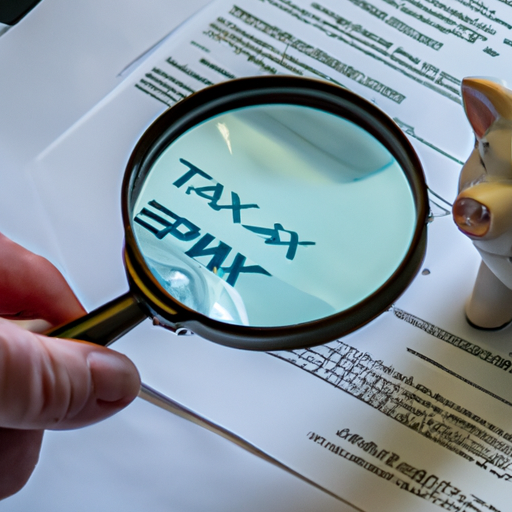
Are you tired of paying high taxes every year? Looking for ways to reduce your tax burden and payer moins d'impôts? You're not alone. Many individuals and businesses are constantly seeking strategies to minimize their tax liabilities and maximize their savings. In this article, we will explore expert tips, tax deductions, credits, and proven techniques for tax planning that can help you achieve significant savings and payer moins d'impôts. So, let's dive in and discover how you can keep more money in your pocket and pay less taxes.
- 1. "Strategies to Pay Less Taxes: Expert Tips on How to Payer Moins d'Impots"
- 2. "Exploring Tax Deductions and Credits: Maximize Your Opportunities to Payer Moins d'Impots"
- 3. "Proven Techniques for Tax Planning: Achieve Significant Savings and Payer Moins d'Impots"
1. "Strategies to Pay Less Taxes: Expert Tips on How to Payer Moins d'Impots"
Strategies to Pay Less Taxes: Expert Tips on How to Payer Moins d'Impots
Paying taxes is an essential part of our civic duty, but it's only natural to want to minimize our tax burden legally. Whether you're an individual or a business owner, there are various strategies you can employ to pay less taxes and maximize your savings. In this section, we will discuss expert tips on how to payer moins d'impots, providing you with valuable insights to reduce your tax liabilities.
1. Take Advantage of Tax Deductions and Credits:
One of the most effective ways to reduce your tax bill is by identifying and utilizing all eligible tax deductions and credits. Deductions such as mortgage interest, medical expenses, education expenses, and charitable contributions can significantly reduce your taxable income. Similarly, tax credits for activities like energy-efficient home improvements, adoption, or higher education can directly reduce the amount of tax you owe.
2. Optimize your Retirement Contributions:
Contributing to retirement accounts not only helps secure your financial future but also offers tax advantages. Contributions to retirement plans like a 401(k) or an Individual Retirement Account (IRA) are typically tax-deductible, reducing your taxable income for the year. Taking advantage of employer matching programs and maximizing your contributions can lead to substantial tax savings while building your retirement nest egg.
3. Consider Tax-Efficient Investments:
Investing in tax-efficient vehicles can help minimize your tax liability. Tax-efficient investments are designed to generate returns with minimal tax consequences, such as tax-free municipal bonds or index funds with low turnover rates. By strategically allocating your investments, you can minimize taxable gains and maximize after-tax returns.
4. Explore Tax-Advantaged Savings Accounts:
Tax-advantaged savings accounts, such as Health Savings Accounts (HSAs) and Flexible Spending Accounts (FSAs), offer opportunities to save on taxes while managing essential expenses. HSAs provide a triple tax benefit, allowing you to contribute pre-tax dollars, grow your savings tax-free, and withdraw funds tax-free for qualified medical expenses. Similarly, FSAs enable you to set aside pre-tax dollars for eligible healthcare or dependent care expenses, reducing your taxable income.
5. Consult with a Tax Professional:
Navigating the complex world of tax laws and regulations can be challenging. Seeking guidance from a qualified tax professional can help you understand the intricacies of the tax code and identify additional strategies specific to your situation. A tax professional can provide personalized advice tailored to your financial goals, ensuring you optimize your tax planning and payer moins d'impots.
Remember, while it's important to legally minimize your tax obligations, it's equally crucial to maintain compliance with tax laws. Implementing these strategies, combined with careful planning and regular tax reviews, can help you optimize your tax situation and enjoy the benefits of payer moins d'impots.
2. "Exploring Tax Deductions and Credits: Maximize Your Opportunities to Payer Moins d'Impots"
When it comes to paying taxes, everyone wants to find ways to minimize their tax burden and keep more of their hard-earned money. One effective strategy to achieve this goal is by exploring tax deductions and credits. By taking advantage of available deductions and credits, individuals and businesses can maximize their opportunities to payer moins d'impôts.
Tax deductions are expenses that can be subtracted from your taxable income, reducing the amount of income subject to taxation. There are various types of deductions that individuals can claim, such as mortgage interest, medical expenses, education expenses, and charitable contributions. By carefully tracking and documenting these expenses, individuals can potentially lower their taxable income and ultimately payer moins d'impôts.
Similarly, tax credits offer a dollar-for-dollar reduction in the amount of tax owed. Unlike deductions, which reduce taxable income, tax credits directly reduce the amount of tax liability. There are numerous tax credits available, including the earned income tax credit, child tax credit, and education credits. By understanding the eligibility criteria and taking advantage of these credits, individuals can significantly decrease their tax liability and payer moins d'impôts.
To maximize the opportunities to payer moins d'impôts, it is essential to stay informed about the ever-changing tax laws and regulations. Tax laws can be complex and subject to frequent revisions, so consulting with a tax professional or using reputable tax software can help ensure that you are taking full advantage of available deductions and credits. Additionally, keeping detailed records and receipts of eligible expenses throughout the year will make the tax filing process smoother and increase the chances of maximizing your tax savings.
In conclusion, exploring tax deductions and credits is a smart strategy for minimizing your tax burden and maximizing your opportunities to payer moins d'impôts. By understanding the available deductions and credits, staying informed about tax laws, and keeping proper records, individuals and businesses can effectively reduce their tax liability and retain more of their income. So, be proactive, take advantage of every opportunity, and start paying moins d'impôts today.
3. "Proven Techniques for Tax Planning: Achieve Significant Savings and Payer Moins d'Impots"
Tax planning is an essential aspect of financial management for individuals and businesses alike. By understanding and implementing proven techniques, it is possible to achieve significant savings and payer moins d'impots (pay less taxes). In this section, we will explore some effective strategies that can help individuals and businesses minimize their tax liabilities and retain more of their hard-earned money.
One of the fundamental techniques for tax planning is taking advantage of tax deductions and credits. By carefully identifying eligible expenses and investments, individuals can reduce their taxable income and ultimately lower their tax bill. For instance, contributing to retirement accounts, such as an Individual Retirement Account (IRA) or a 401(k) plan, not only helps secure one's financial future but also provides an immediate tax benefit. These contributions are often tax-deductible, effectively reducing the individual's taxable income.
Another effective approach to tax planning is structuring businesses in a tax-efficient manner. Choosing the right legal entity, such as a limited liability company (LLC) or S-corporation, can have a significant impact on the amount of taxes owed. By understanding the tax implications of each entity type and selecting the one that aligns with the business's goals, entrepreneurs can optimize their tax situation. Additionally, properly managing business expenses and keeping detailed records can help maximize deductible expenses, further reducing the tax burden.
Investment strategies can also play a crucial role in tax planning. For instance, investing in tax-advantaged accounts, like a Health Savings Account (HSA) or a 529 college savings plan, can provide tax benefits while also helping individuals save for specific purposes. These accounts offer tax-free growth or withdrawals, allowing individuals to pay for qualified medical expenses or education costs without incurring additional taxes. By strategically allocating investments in these accounts, individuals can achieve both their financial goals and payer moins d'impots.
Lastly, staying informed about changes in tax legislation and seeking professional advice can greatly assist in tax planning efforts. Tax laws are subject to frequent updates and amendments, and understanding these changes can help individuals and businesses make informed decisions. Consulting with a tax professional or an accountant can provide valuable insights and guidance tailored to specific situations, ensuring that taxpayers take full advantage of available tax-saving opportunities.
In conclusion, tax planning is a crucial aspect of financial management that can lead to significant savings and payer moins d'impots. By utilizing proven techniques, such as maximizing deductions and credits, structuring businesses efficiently, implementing tax-advantaged investment strategies, and staying informed about tax laws, individuals and businesses can optimize their tax situation and retain more of their earnings. Taking a proactive approach to tax planning not only helps individuals and businesses save money but also ensures compliance with tax regulations.